

How to Fall Asleep Fast: 9 Science-Backed Methods

Brain.FM
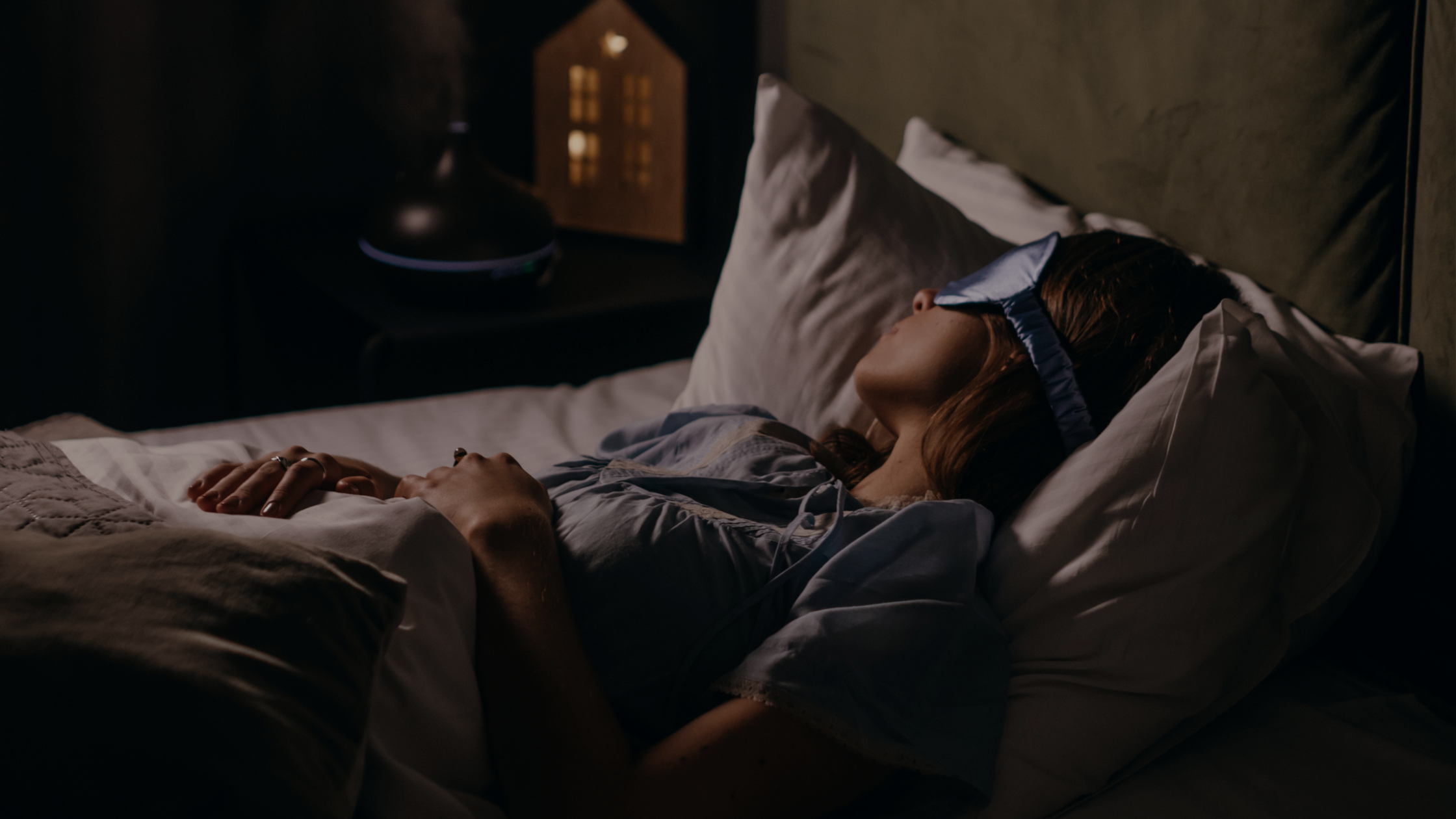
You are exhausted. You get into bed. And your brain, quiet all day, suddenly wants to review every awkward thing you have said since 2014.
If you want to know how to fall asleep fast, the first thing to understand is that lying awake usually is not a willpower problem. It is an arousal problem. Your body may be tired, but your nervous system is still switched to "on," and you cannot force it off by trying harder. In fact, trying harder is one of the surest ways to stay awake.
The good news: the switch responds to inputs. Temperature, breathing, attention, and sound all feed into the system that decides whether you drift off in ten minutes or stare at the ceiling for an hour. Below are nine methods to fall asleep quickly, each grounded in what sleep researchers actually measure, roughly in the order you would use them across an evening.
What counts as falling asleep fast?
Sleep scientists track something called sleep onset latency, the time between lights-out and your first real sleep. Falling asleep the instant your head hits the pillow is not the goal, and it can even be a sign of sleep deprivation. A healthy sleep-onset window sits somewhere around 10 to 20 minutes. So "fast" does not mean instant. It means landing inside that window instead of drifting well past it, by removing the things keeping you aroused rather than knocking yourself out on command.
Why your brain won't switch off
Insomnia researchers describe the core problem as hyperarousal: a nervous system running hot when it should be winding down. It shows up in two flavors that often feed each other. There is physical arousal, a faster heart rate and a body that has not cooled, and there is cognitive arousal, the racing, planning, replaying mind. Most of the methods below target one or the other, so match the method to whichever kind of arousal is loudest for you tonight rather than working through a generic checklist.
1. Warm up to cool down
Here is a counterintuitive one: to fall asleep fast, warm up first. A warm shower or bath an hour or two before bed sends blood to your hands and feet, which then radiate heat and pull your core temperature down. That drop is one of the physical signals your brain reads as "time to sleep."
The evidence is unusually clean for a sleep tip. A meta-analysis of 13 trials found that passive body heating with warm water (around 40 to 42.5 degrees Celsius) for as little as ten minutes, timed one to two hours before bed, significantly shortened how long people took to fall asleep.
The room matters too. A bedroom on the cooler side supports that same core-temperature drop, while an overheated room fights it. If you only change one thing tonight, make it a warm shower before bed and a cooler bedroom after. One caution: very hot water can cause dizziness or a drop in blood pressure, so if you are pregnant, have a heart condition, or are older, check with your doctor before making hot baths a routine.
2. Slow your breathing
Slow, deliberate breathing is the fastest lever you have on physical arousal. Extending your exhale nudges the parasympathetic nervous system, the "rest and digest" branch, which lowers heart rate and helps the body downshift. In a small sleep-lab pilot,, a pre-sleep slow-breathing session produced an immediate drop in heart rate and a rise in heart-rate variability, a marker of that parasympathetic shift.
The popular 4-7-8 pattern is an easy entry point: breathe in through your nose for 4 counts, hold for 7, exhale slowly through your mouth for 8. That works out to roughly 3 breaths a minute. The 7-count hold is optional, so if holding your breath feels uncomfortable, drop it and simply breathe in slowly and out more slowly still. The exact numbers matter less than the principle, which is a long, unforced exhale that is longer than the in-breath. If you want a gentler alternative, resonance breathing (in for about 4, out for about 6, at a steadier pace of roughly 6 breaths a minute) is the rate used in most slow-breathing sleep research. Run either for a few minutes, and if counting itself feels stressful, just make each out-breath longer than the in-breath and let the rhythm settle.
3. Relax your body, muscle by muscle
When your body will not let go, give it a job. Progressive muscle relaxation means tensing one muscle group for a few seconds, then releasing, and moving through the body from your feet to your face. The release is the point: it teaches a keyed-up system what "off" feels like, and relaxation training is one of the better-evidenced tools inside sleep therapy.
This is also the backbone of the so-called "military method" that circulates online as a way to fall asleep in two minutes. Strip away the mythology and it is really progressive muscle relaxation plus a calm mental image (picture yourself lying still in a canoe on a quiet lake). The two-minute claim is anecdotal, not from a clinical trial, but the ingredients are legitimate. Treat it as a solid relaxation routine rather than a guaranteed stopwatch trick.
4. Scramble your racing thoughts
If your problem is a mind that will not stop narrating, this is the method for you. It is called cognitive shuffling, or more formally serial diverse imagining, developed by cognitive scientist Luc Beaudoin.
Here is how to do it. Pick a simple, emotionally neutral word, say "table." Take the first letter, T, and picture a series of unrelated objects starting with it, one at a time: a turtle, a teapot, a tent, a thumbtack. When you run dry, move to the next letter, holding each image briefly before letting it go.
Why it works: worry and planning run on coherent, story-like thinking, and a stream of random, disconnected images is fundamentally incompatible with that. It starves the spiral of fuel while gently mimicking the drifting, nonsensical quality of thought you have right before sleep. The evidence is early. In a conference-poster study of 154 university students with busy pre-sleep minds, an app-based version of the technique (which played neutral words at 8-second intervals for participants to picture) worked about as well as structured problem-solving at reducing pre-sleep arousal, sleep effort, and poor sleep quality, with the practical advantage that you can do it in bed rather than earlier in the evening. Consider it a promising option for how to fall asleep fast when your mind is racing, not a proven cure.
5. Stop trying so hard
This one sounds like a joke and is not. If lying there thinking "I have to fall asleep" is spiking your anxiety, deliberately do the opposite: get comfortable, keep your eyes gently open, and calmly try to stay awake without doing anything stimulating.
The technique is called paradoxical intention, and it works by removing the performance pressure that turns bedtime into a test you are failing. A 2022 meta-analysis of small trials found it improved insomnia symptoms. When you stop chasing sleep, you stop feeding the arousal that chasing it creates, and sleep tends to arrive on its own.
A quick note on sound. Silence leaves your brain free to fill the room with tomorrow's to-do list, which is why many people fall asleep faster with steady background audio than in a quiet room. If you want to test this, Brain.fm's Sleep category is a simple place to start, and it is free to try. More on why purpose-built audio differs from a playlist in method 7.
6. Get out of bed (yes, really)
If you have been lying awake for what feels like 20 minutes or more, and especially if frustration is building, get up. Leave the bedroom, do something quiet and boring in dim light, and go back only when you feel sleepy.
This is stimulus control, one of the best-evidenced behavioral techniques in sleep medicine (sleep-medicine guidelines rate it alongside sleep restriction and relaxation training). The logic is about training: when you spend hours awake and anxious in bed, your brain learns that bed is a place for being awake and anxious. Getting up protects the association between your bed and actual sleep. It feels wrong in the moment, but over a week or two it is one of the most reliable tips to sleep faster, because it fixes the pattern instead of just patching one night.
7. Use the right sound
Sound is one of the most accessible sleep tools. Steady background audio masks the sudden noises (a car door, a creaking house) that can pull you back toward wakefulness, and it gives a restless mind something neutral to settle on instead of tomorrow's to-do list. For a lot of people, silence is actually the harder setting.
But not all "sleep sounds" are equal, and this is where most playlists fall short. A calming playlist was assembled to sound nice, not to help you sleep, and any track with an interesting hook, a lyric, or a dynamic swell can quietly pull your attention back and keep you up. (More on that in Music to Fall Asleep vs. Stay Asleep.)
This is the gap Brain.fm's Sleep category is built to close. Instead of curating existing tracks, Brain.fm composes sleep music on the same patented neural phase-locking technology as its Focus music: rhythmic modulation built into each stereo channel, with the hooks, lyrics, and swells that grab attention deliberately left out. That technology goes beyond binaural beats, which rely on a single technique. On focus, it has been tested against placebo versions of the same music in NSF-supported, peer-reviewed research. If you've only ever used a "relax" playlist, Sleep is worth a direct comparison. (Why sleep music works.)
8. Fix the daytime inputs
Some of how fast you fall asleep tonight was decided hours ago:
Light. Bright light late in the evening tells your brain it is still daytime. Dim the lights in the last hour, and get bright light in the morning to anchor your clock.
Caffeine. It lingers longer than most people assume, so an afternoon coffee can still be keeping arousal elevated at bedtime. Push your cutoff earlier.
Consistency. A roughly fixed wake time, even on weekends, is one of the most powerful natural ways to fall asleep faster, because it makes you sleepy on schedule.
None of these is a bedtime trick, but they set the ceiling for how well the bedtime tricks can work.
9. Put your worries somewhere else, on purpose
If the same anxieties surface the moment you lie down, do not fight them in the dark. Earlier in the evening, spend ten minutes writing down what is on your mind, plus one small next step for each item. This "worry download" gets the open loops out of your head and onto paper, so your brain stops rehearsing them to make sure they are not forgotten, and you arrive at bedtime with less to process.
What to actually do tonight
You do not need all nine. Stack a few that target your main problem:
Warm shower about 90 minutes before bed, then a cool bedroom.
In bed, start Brain.fm Sleep audio.
Run a few minutes of slow 4-7-8 breathing.
If your mind races, switch to cognitive shuffling.
If you are still wide awake and frustrated after ~20 minutes, get up, reset in dim light, and return when sleepy.
Give any new routine one to two weeks before you judge it. A single rough night is noise, not a verdict.
When "fast" isn't happening
If trouble falling asleep persists most nights for three months or more, that may be chronic insomnia, and it deserves more than bedtime hacks. The first-line treatment recommended by sleep-medicine guidelines is not a pill; it is cognitive behavioral therapy for insomnia (CBT-I), a structured program that includes several of the methods above. If that describes you, talk to a doctor or a CBT-I provider. Separately, if you or a partner notice loud snoring, gasping or long pauses in breathing at night, or you feel very sleepy during the day despite enough time in bed, mention it to a doctor, since those can signal sleep apnea rather than ordinary trouble sleeping. The techniques here still help, but they work best as part of that bigger picture rather than a substitute for it.
Frequently asked questions
Does the military method work? There is no clinical trial behind the famous "fall asleep in two minutes" claim, so treat that number as folklore. The routine itself, though, is built from techniques that do have evidence (deep muscle relaxation plus a calm mental image), so it is a reasonable wind-down practice even if the stopwatch promise is not guaranteed.
How do you fall asleep in 5 minutes? For most people, five minutes is faster than is realistic, or even healthy. A normal sleep-onset window is about 10 to 20 minutes, and regularly crashing in under five can be a sign you are sleep-deprived. The fastest realistic route is to stack a few methods from this guide: warm up to cool down, slow your breathing, and if your mind races, try cognitive shuffling.
Is 4-7-8 breathing proven? The specific 4-7-8 count has not been proven to send you to sleep on its own. What is well supported is the principle behind it: slow breathing with a long exhale shifts you toward the "rest and digest" state, lowering heart rate and easing physical arousal. Use it as a wind-down tool, not a guaranteed off switch.
The bottom line
So, how do you fall asleep fast? Not by trying harder. You fall asleep faster by removing what is keeping you aroused: cool the body, slow the breath, relax the muscles, scramble the racing thoughts, take the pressure off, protect your bed for sleep, and feed your brain steady, non-distracting sound instead of silence or a stimulating playlist. Your restless mind at 1 a.m. is not a personal failing. It is an over-aroused system doing exactly what over-aroused systems do, and the fix is better input, not more willpower.
If you want to test the sound piece tonight, try Brain.fm free and see what your brain does with audio built to help you switch off, rather than audio that just happens to be playing.
This article is general information, not medical advice. If sleep problems persist or interfere with your daily life, please talk to a qualified healthcare professional.