

The 4 Types of Focus: How to Match Your Music to the Work You're Doing

Brain.FM
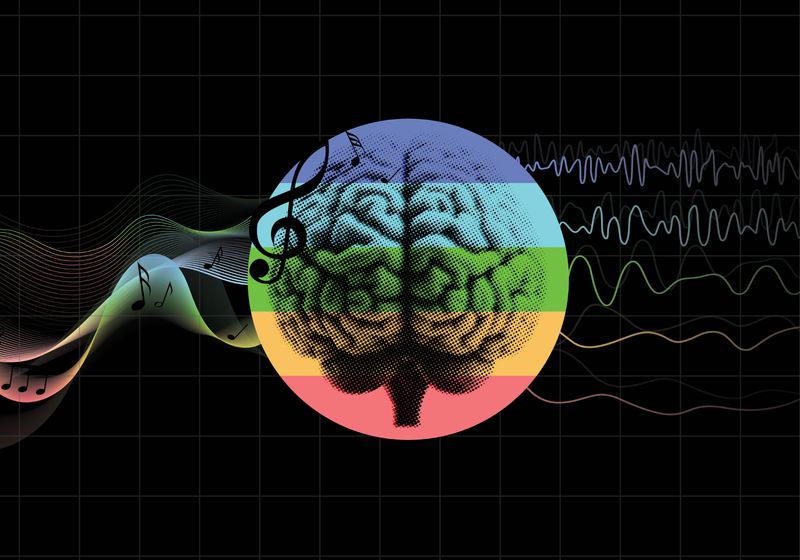
You press play on your favorite focus playlist, open the spreadsheet, and… nothing. Thirty minutes later you realize you've been bobbing your head instead of crunching numbers. Sound familiar?
Here's the thing most productivity advice gets wrong: it treats focus like a single switch, on or off. But neuroscience tells a different story. Your brain uses several distinct modes of attention depending on what you're doing, and each mode responds to sound differently. The music that helps you crush a brainstorm may be the same music that derails your data analysis.
Understanding these focus types, and matching your music to each one, is one of the simplest upgrades you can make to your workday. Let's break it down.
Why "Focus" Isn't One Thing: A Quick Primer on Cognitive Load
Cognitive load theory, first developed by educational psychologist John Sweller in the late 1980s, describes how different tasks place different demands on your working memory. Some tasks require you to hold multiple pieces of information simultaneously (high intrinsic load), while others are more automatic and routine (low intrinsic load).
Research published in the Journal of Experimental Psychology has consistently shown that the relationship between background sound and performance depends on the type of cognitive task being performed. A 2021 meta-analysis by Welić and Lesić in Frontiers in Psychology found that background music's effects on cognitive performance range from beneficial to harmful depending on task complexity, music complexity, and individual differences.
This is why the question "Should I listen to music while working?" has no single answer. The real question is: "What kind of work am I about to do, and what kind of sound does that work need?"
Let's map the four primary types of focused work, and the audio environment that supports each.
Type 1: Deep Analytical Focus
Tasks: Data analysis, coding, financial modeling, complex problem-solving
Deep analytical work demands sustained, high-load attention. You're manipulating symbols, following logical chains, and holding multiple variables in working memory at once. This is the most cognitively demanding focus type.
Research from the University of Wales found that steady-state background sound, consistent, predictable, low-variation audio, outperforms both silence and variable music for serial recall and analytical tasks. The key word is predictability. Your auditory system devotes fewer resources to processing a steady sonic environment, leaving more cognitive bandwidth for the task at hand.
What works: Minimal, low-variation audio with no lyrics. Think ambient textures, brown noise, or engineered focus audio. Music with sudden dynamic changes, strong melodies, or vocal elements competes for the same working-memory resources your analytical task needs.
What to avoid: Lyrical music, complex compositions, anything with abrupt shifts in tempo or dynamics. A 2019 study in Applied Cognitive Psychology confirmed that music with lyrics significantly impairs reading comprehension and complex cognitive tasks compared to instrumental backgrounds.
Brain.fm approach: Brain.fm's Deep Work mode uses neural phase locking, rhythmic patterns embedded in the audio that gently guide your brain waves toward sustained beta-frequency activity associated with analytical concentration. Unlike a generic "lo-fi beats" playlist, the audio is engineered to be functionally invisible: it supports your focus without demanding any attention itself.
Type 2: Creative and Generative Focus
Tasks: Brainstorming, writing first drafts, ideation, design exploration
Creative work operates on a different attentional wavelength, literally. While analytical tasks rely on tight, focused attention (high beta activity), creative thinking benefits from a broader, more relaxed attentional state often associated with alpha brain-wave activity.
A widely cited study from the Journal of Consumer Research found that a moderate level of ambient noise (around 70 dB) enhances creative performance by promoting abstract thinking. Too quiet and your focus narrows too tightly; too loud and you can't think at all. The sweet spot is a sonic environment that's present enough to gently defocus your attention without overwhelming it.
What works: Moderate ambient sound, nature soundscapes, or music with gentle variation and movement. A touch of unpredictability can actually help here, it nudges your brain away from rigid, analytical pathways and toward associative, lateral thinking.
What to avoid: Complete silence (too constraining for divergent thought) or highly structured, repetitive audio (which can lock you into linear thinking patterns).
Brain.fm approach: Brain.fm's Creative Focus sessions use a slightly different neural modulation pattern, encouraging alpha-dominant brain states that research associates with insight and divergent thinking. The audio feels more open and spacious compared to the Deep Work mode, designed to broaden your attentional window rather than narrow it.
Type 3: Flow-State Focus
Tasks: Writing (once you're rolling), repetitive skilled work, editing, design refinement
Flow state, the psychology concept popularized by Mihaly Csikszentmihalyi, occurs when the challenge of a task is well-matched to your skill level and your attention becomes fully absorbed. You're not straining to focus; focus is happening effortlessly.
The tricky thing about flow is that you can't force it, but you can create conditions that make it more likely. A 2023 study published in Consciousness and Cognition found that participants who listened to self-selected instrumental music entered flow states more frequently during moderately challenging tasks. The music served as a "shield" against distraction without creating its own cognitive interference.
What works: Consistent, rhythmic audio that fades into the background. The ideal is music that maintains a steady energetic level, enough to keep your arousal optimal, not so much that it pulls your attention. Think of it as sonic scaffolding: it holds the structure of your focus while you do the building.
What to avoid: Audio that demands active listening decisions, shuffle playlists with jarring transitions, podcast-style content, or music you're actively discovering for the first time.
Brain.fm approach: Brain.fm sessions are designed to run continuously without the attention-breaking gaps and transitions that occur between songs on a playlist. The neural phase locking technology maintains a consistent auditory rhythm that helps sustain flow once you've entered it, and the audio is purpose-built to be processed below conscious awareness.
Type 4: Administrative and Low-Load Focus
Tasks: Email, Slack, scheduling, filing, routine data entry, light communication
Not every work task requires intense concentration. Administrative work is largely procedural, low cognitive load, often repetitive, and sometimes mind-numbingly boring. The challenge here isn't intellectual; it's motivational. You need enough stimulation to stay engaged without getting so energized that you start procrastinating on the admin in favor of something more interesting.
Research on arousal and performance, dating back to the Yerkes-Dodson law, shows that low-demand tasks actually benefit from higher levels of stimulation. A 2020 study in PLOS ONE found that upbeat background music improved performance on simple, repetitive tasks by maintaining arousal and reducing perceived boredom.
What works: More energetic, rhythmic music. This is where your personal preferences matter most, since the cognitive load is low, even music with lyrics is unlikely to cause interference. Familiar music you enjoy can boost mood and help you push through the inbox.
What to avoid: Ultra-calm ambient audio that might lower your arousal below the threshold needed to stay engaged. For simple tasks, too much calm equals drowsiness.
Brain.fm approach: Brain.fm's Focus mode includes sessions with higher energy profiles that keep your arousal level in the zone for getting through routine work. The underlying neural modulation still helps maintain consistent attention, but the musical character is more lively, matching the task's lower demands.
Putting It All Together: Your Focus-Music Matching Framework
Here's a quick-reference guide you can bookmark or screenshot:

The simplest way to apply this framework: before you start a work session, take five seconds to identify which type of focus the task demands. Then select your audio accordingly. It sounds simple because it is, and that simplicity is exactly what makes it effective.
Why Generic Focus Playlists Fall Short
Most "focus playlists" on streaming platforms are curated by mood, not by cognitive function. A playlist labeled "Deep Focus" might contain tracks that range from sparse ambient pads to upbeat electronic instrumentals, fine for general background listening, but not optimized for any specific type of cognitive work.
The bigger problem is transitions. Every time a new track starts, your brain briefly orients toward the change, an unconscious attentional shift that researchers call the orienting response. Multiply that by 15–20 song changes per hour and you're introducing dozens of micro-interruptions into your work session.
This is where purpose-built audio like Brain.fm offers a genuine advantage. Because the audio is engineered as continuous, gapless sessions with embedded neural phase locking, it eliminates the transition problem entirely. Your brain gets a consistent auditory signal that supports sustained attention without the stop-start pattern of a playlist.
Start Matching Your Music to Your Work Today
The relationship between music and focus isn't a mystery, it's a science. And the core principle is straightforward: different types of cognitive work respond to different types of sound.
Start by auditing your next workday. Notice when you switch between deep analytical tasks, creative brainstorming, flow-state work, and routine admin. Then experiment with adjusting your audio environment to match.
If you want to skip the trial-and-error, try Brain.fm free and experience music that's been engineered from the ground up for how your brain actually works. Each session is designed to support a specific type of focus, so you can stop guessing and start working at your best.