

Can Music Actually Change Your Brain? What Neuroplasticity Research Tells Us

Brain.FM
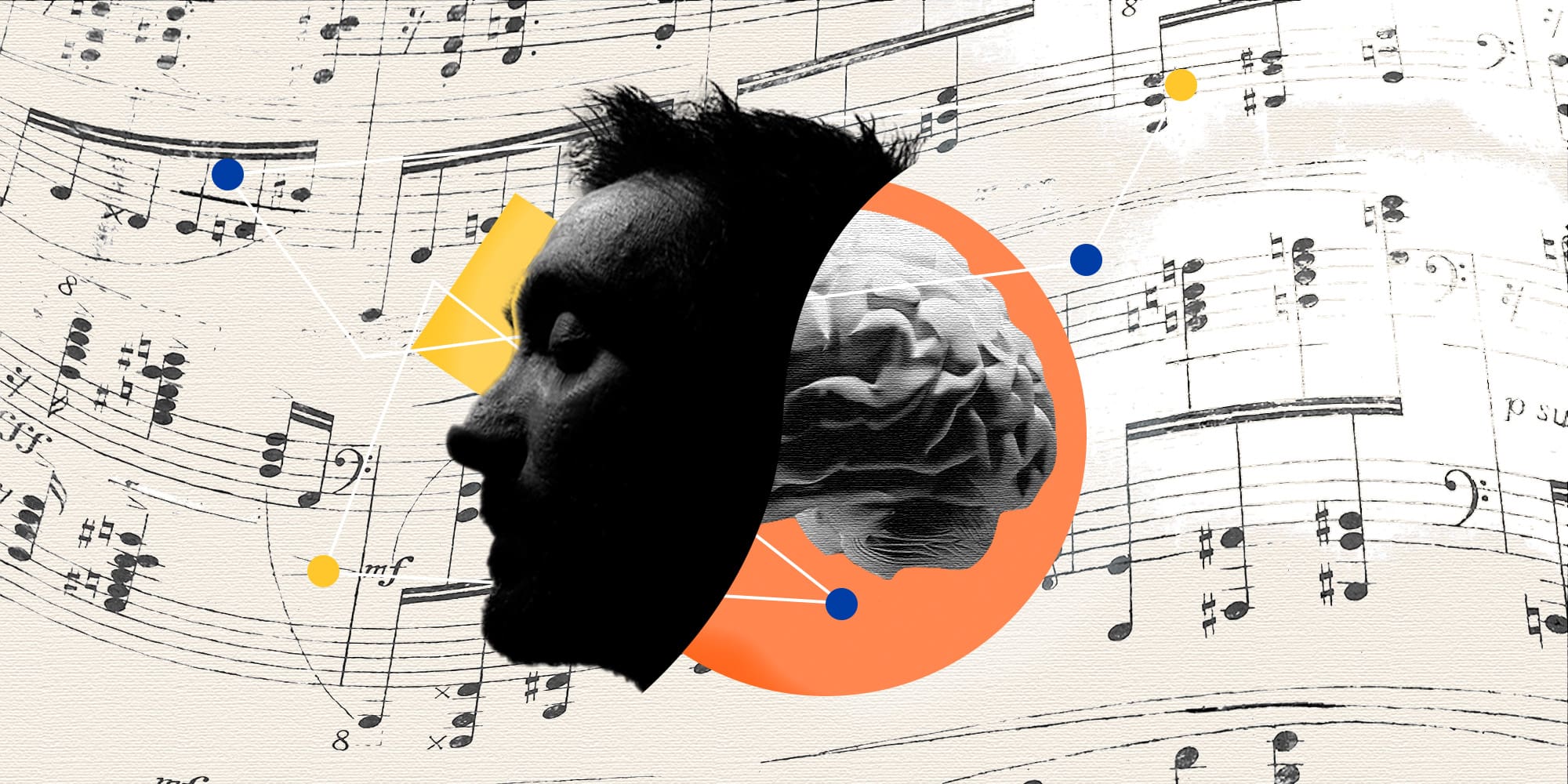
You have probably heard someone say that music "rewires your brain." It sounds like the kind of feel-good claim that falls apart the moment you look closely. So here is the honest question worth asking: does music and brain neuroplasticity describe a real, measurable phenomenon, or just a nice metaphor?
The short answer is that it is real, and the research is more substantial than most people realize. Over the past two decades, neuroscientists using brain imaging, EEG, and long-term studies have documented how music changes both the structure and the function of the brain. Some of these changes are dramatic and visible on a scan. Others are subtle and build slowly over years. This article walks through what the science actually shows about how music affects the brain, where the evidence is strong, and where researchers are still working things out.
What neuroplasticity actually means
Neuroplasticity is the brain's ability to change its structure and function in response to experience. Far from being fixed in adulthood, the brain continuously adjusts the strength of connections between neurons, and in some cases changes the physical volume of brain regions, based on how it is used.
A 2024 review in Brain, Behavior, & Immunity - Health described music as having a remarkable capacity to drive these changes, reshaping neural networks across the entire lifespan, from prenatal development through aging. The same review noted that music engages a wide network of brain regions at once, spanning sensory and motor processing, memory, attention, and emotion. That breadth matters: because music recruits so many systems simultaneously, it gives the brain an unusually rich workout.
The key thing to understand is that "change your brain" is not one thing. It covers everything from a momentary shift in brainwave activity while you listen, to lasting structural differences that take years of practice to build. Both are real. They just operate on very different timescales.
The musician's brain: the strongest evidence we have
The clearest, most replicated evidence comes from studying the brains of trained musicians. Researchers have used this group as a model for studying plasticity precisely because the effects are so visible.
A foundational 2003 study published in the Journal of Neuroscience by Gaser and Schlaug compared the brains of professional musicians, amateur musicians, and non-musicians. They found greater gray matter volume in musicians in regions tied to motor control, auditory processing, and visuospatial ability. Notably, amateur musicians fell in between, showing intermediate changes. That dose-response pattern, where more practice corresponds to bigger differences, is one of the strongest signals that the practice is driving the change rather than the other way around.
A frequently replicated finding involves the corpus callosum, the thick band of fibers connecting the brain's two hemispheres. Multiple studies, starting with Schlaug and colleagues in 1995, have found that musicians tend to have a larger anterior corpus callosum, which supports the fast coordination between hands that playing an instrument demands.
Here is the most compelling piece. A longitudinal study by Hyde and colleagues followed children learning music and found that, despite no differences at the start, structural brain changes were visible after roughly 15 months of training, including changes in the corpus callosum and in motor and auditory regions. Because the children were measured before and after, this design rules out the simplest objection: that musicians' brains were just born different. The training itself produced the change.
A note on what this does and does not prove: The strongest structural evidence comes from active music training, not passive listening. Playing an instrument is a demanding, full-brain activity. If you want the kind of changes seen in musicians, the research points to learning and practicing, not just pressing play. That honesty matters, and we will come back to what listening can and cannot do.
What happens in your brain when you simply listen
Active training is the heavyweight, but listening is far from passive at the neural level.
When you hear music, your auditory system breaks it into pitch, rhythm, and timing, then distributes the work across motor regions (which is why you tap your foot), memory systems, and emotional centers. One of the most striking findings concerns the brain's reward system. In a landmark 2011 study in Nature Neuroscience, Salimpoor and colleagues used PET and fMRI scanning to show that listening to intensely pleasurable music triggers the release of dopamine in the striatum, the same neurochemical pathway involved in food, and other core rewards.
That finding reframes music as something the brain genuinely values, not just tolerates. And a follow-up line of research found that activity in this reward circuit, and its connection to the auditory cortex, could even predict how much people were willing to pay for a new piece of music they had never heard before. Your brain is constantly forming predictions about where a melody is going, and the interplay between expectation and surprise is part of what makes music rewarding.
This is also where neural entrainment comes in, the tendency of brainwave activity to synchronize with rhythmic sound. When neurons align their firing to a steady acoustic rhythm, a process called neural phase locking, it can influence states tied to attention and relaxation. This is the mechanism that functional music is built around, and it is the difference between sound that just plays in the background and sound engineered to guide a specific mental state.
Why this is where Brain.fm comes in
Most music is designed to entertain. The very features that make a song enjoyable, lyrics, dramatic changes in tempo, hooks that grab your attention, are the same features that pull your focus away when you are trying to concentrate.
Brain.fm takes a different approach. Instead of curating existing songs, it engineers functional music using patented technology designed to elicit strong neural phase locking, encouraging populations of neurons to fall into coordinated activity associated with focus, relaxation, or sleep. The company validates this with controlled studies that include a placebo group, the same music without the modulation, so any difference can be attributed to the technology itself. In one National Science Foundation funded study of 677 participants, the median person using focus-specific modulation stayed on task 39% longer than the comparison group.
The point is not that listening to Brain.fm will give you a musician's brain. It is that purpose-built audio works with these well-understood mechanisms, entrainment and attention, in a way a generic playlist does not.
Does listening change your brain over the long term?
This is the question that matters most for everyday people, and it is where the science is genuinely promising while still developing.
Most of the dramatic structural research involves musicians who practiced for years. But newer work suggests that regular music engagement, including listening, may have measurable benefits over time, especially for the aging brain. A 2023 study of 132 healthy older adults found that music interventions enhanced cerebellar gray matter and auditory working memory, even against a backdrop of normal age-related brain shrinkage. A large analysis drawing on nearly 11,000 Australian adults aged 70 and older has examined how music listening and music making relate to dementia-related outcomes, part of a growing research effort, supported by the NIH and AARP, into music as a tool for protecting cognitive health as we age.
A 2025 review in Brain Sciences summarized the current consensus well: musical experience, whether you are actively playing or receptively listening, can shape neural oscillations, reward dynamics, and long-term connectivity in ways that support cognition and well-being.
So the realistic takeaway is this. A single listening session will not reshape your brain. But consistent engagement with music over months and years appears to be one of the accessible, non-pharmaceutical ways to support a healthy, adaptable brain over a lifetime. That is a long game, and it is worth playing.
What this means for you
You do not need to become a concert pianist to benefit. A few evidence-aligned takeaways:
For lasting structural change, active beats passive.
Learning an instrument, even later in life, is the most powerful intervention the research supports.
For everyday states, the right listening matters.
Music engineered for focus, relaxation, or sleep works with your brain's natural entrainment rather than competing with your attention.
Consistency is the real lever.
The brain-health benefits show up over months and years of regular engagement, not in a single afternoon.
Match the music to the goal.
Music with lyrics and big dynamic swings is great for enjoyment and poor for concentration. Use functional music when you need to work, wind down, or sleep.
The bottom line
Can music change your brain? Yes, and the evidence spans everything from immediate dopamine release to decades-long structural remodeling in musicians, to emerging signs that regular listening helps protect the aging brain. The phrase "music rewires your brain" turns out to be less hype than fact, as long as you are honest about which effects come from playing, which come from listening, and how long each takes.
If you want to put this to work, the simplest place to start is with music actually engineered for the state you are trying to reach. Brain.fm builds functional music for Focus, Relax, and Sleep, grounded in the same neuroscience this article covers and validated in controlled studies. Try it free and feel the difference for yourself.