

Jet Lag and Sound: Can Audio Help You Adjust to a New Time Zone?

Brain.FM
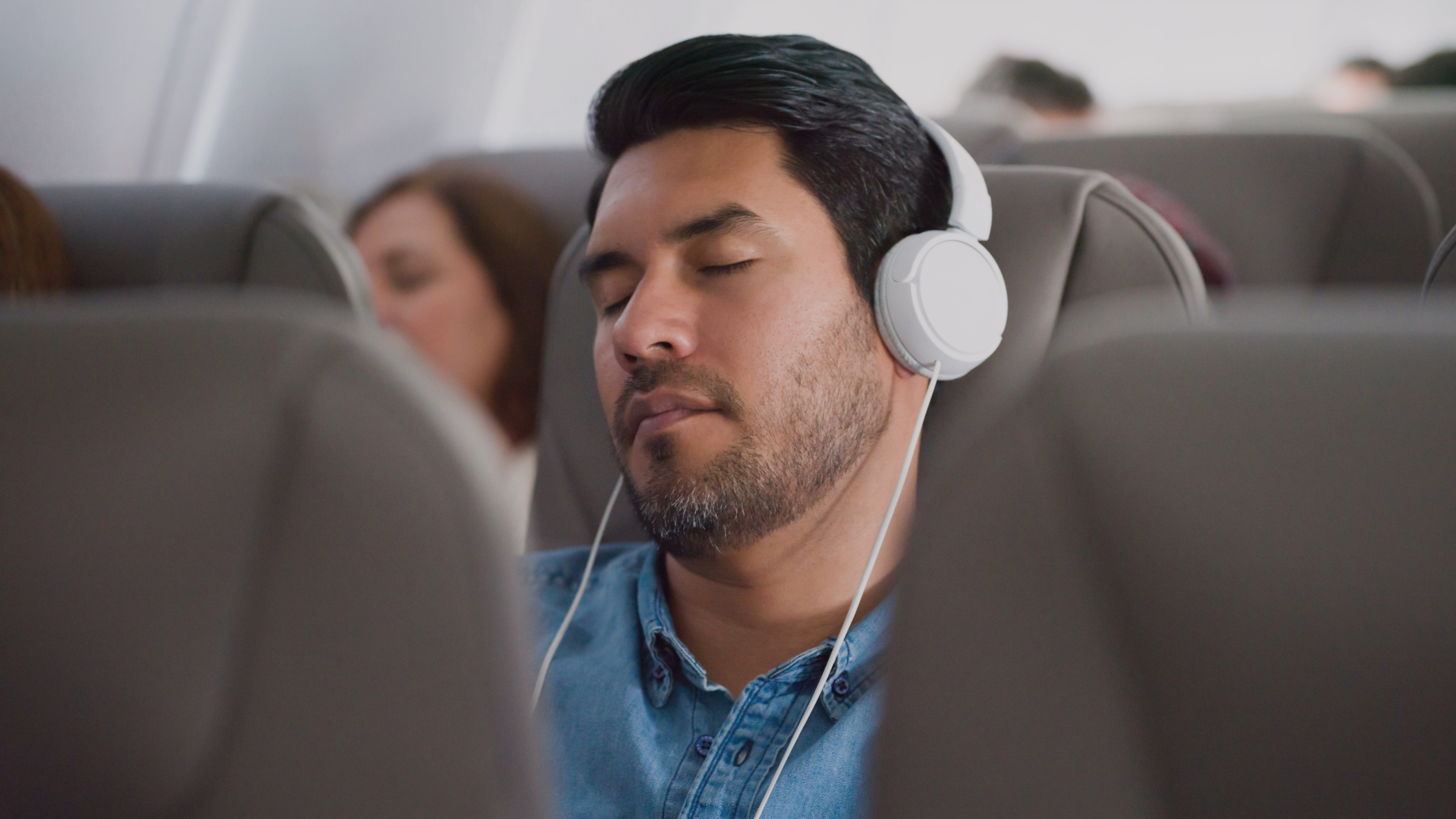
You land, you check into the hotel, and at 3am local time you are wide awake staring at the ceiling. Your body is convinced it is mid-afternoon back home, and no amount of willpower is going to change its mind. If you have ever reached for headphones in that moment, hoping the right track might coax you to sleep or at least settle your spinning head, you have asked a reasonable question: can music for jet lag actually help, or is it wishful thinking?
The honest answer is layered. Sound cannot reset your internal clock the way a burst of morning sunlight can. But audio does three things that matter enormously when you are crossing time zones, and there is even early evidence it can nudge the clock itself. Here is what the research supports, and how to use it on your next trip.
What Jet Lag Actually Is (And Why It Lingers)
Jet lag is not just tiredness. It is a temporary circadian rhythm sleep-wake disorder, which means your internal 24-hour clock is still running on your departure time zone while the world around you has moved to a new one. That mismatch is why your body wants to sleep, eat, and focus at all the wrong moments.
The symptoms reflect how many systems that clock governs: trouble falling or staying asleep, daytime sleepiness, slowed thinking and shaky attention, irritability and low mood, and digestive upset. Jet lag typically appears after crossing three or more time zones, and the rougher the crossing, the longer it lasts.
How long is that, exactly? A useful rule of thumb is that it takes about one day per time zone crossed to adjust, often less when flying west, though this varies a lot from person to person. Direction matters too. Most travelers, around three in four, find jet lag worse flying east than west. The reason is tucked inside your biology: the human internal clock naturally runs slightly longer than 24 hours, close to 24.2 hours on average. Flying west stretches your day, which your clock tolerates easily. Flying east compresses it, which your clock resists.
Understanding this is the key to understanding what audio can and cannot do.
The Honest Answer: Sound Does Not Reset Your Clock. Light Does.
If you remember one thing, make it this. The master clock sitting in your brain is synchronized above all by one signal: light. Light is by far the most powerful time cue, or "zeitgeber," your body has. Correctly timed light exposure is the most effective tool for shifting your clock, which is why nearly every evidence-based jet lag protocol is built around getting the right light at the right time and avoiding it at the wrong time.
Other cues can contribute, including meal timing, exercise, and melatonin. Sound sits in this second group of weaker, non-photic signals. So if an app promises to "reset your circadian rhythm" through sound alone, treat that claim with healthy skepticism. That is not how the biology works, and overpromising is exactly what erodes trust in genuinely useful tools.
Where Sound Does Have a Measurable Effect
Here is the nuance that makes this interesting. "Weaker than light" does not mean "zero."
In a small but notable study, researchers delivered a two-hour arousing auditory stimulus late at night and measured what happened to participants' body clocks. The sound produced significantly larger phase delays in the melatonin rhythm (about 0.89 hours versus 0.27 hours in the control) and in core body temperature than the control condition did, and it reduced fatigue. It was the first demonstration that an auditory stimulus can phase-shift human circadian rhythms, and the authors suggested it could be a useful countermeasure for travelers and shift workers. A follow-up using the same sound in the early morning instead of the middle of the night moved the clock in the opposite direction, a phase advance, though the authors cautioned that the shift might owe something to the stimulus being arousing rather than to a direct action on the clock.
Keep this in perspective. These were small studies, the shifts were under an hour, and sound is not an established clinical treatment for jet lag. But the takeaway is fair: sound is a gentle lever on the clock, not a reset button. The bigger wins come from what audio does around your sleep and your state of mind.
What Sound Can Do for Jet Lag
This is where audio gets practical. The research on music and sleep is stronger than the research on sound and the body clock, though none of it tested jet lag directly. Here are four ways audio can help.
1. It can improve your sleep at the new bedtime. This is the best-supported benefit. A 2022 Cochrane review of 13 randomized trials in adults with insomnia found moderate-certainty evidence that listening to music improves self-reported sleep quality, and none of the trials reported harms. Evidence that music helps you fall asleep faster or sleep longer was weaker and less certain. These were not jet lag studies. When your whole jet lag recovery depends on finally sleeping at destination-appropriate hours, a tool that helps you wind down and sleep better is doing real work.
2. It downshifts an activated nervous system. Travel is a stressful, overstimulating experience, and arriving keyed-up makes sleeping on the new schedule even harder. Calming, steady audio occupies the mind and supports the shift from alert to restful, which is often the exact gap between lying awake and drifting off.
3. It helps you focus and function during the day. Jet lag does not only wreck your nights. It fogs your days, dulling attention and memory when you most need to perform at a meeting or navigate a new city. Focus-oriented audio can help you push through the daytime sleepiness without reaching for a fourth coffee that will sabotage tonight's sleep.
4. It anchors your new schedule. Repetition is a cue. Using the same wind-down audio every night at your destination bedtime, and the same focus audio each morning, gives your body a consistent, portable signal that reinforces the schedule you are trying to adopt. Think of it as a behavioral bookmark for "it is night now" or "it is time to work."
None of this replaces smart light timing or, if your doctor recommends it, melatonin. Audio is the adjunct that makes the rest of your plan easier to follow.
This article is general information, not a substitute for professional medical advice. If jet lag or sleep problems persist, or you are considering melatonin, talk to your doctor.
Why Purpose-Built Audio Beats a Random Playlist
If the goal is sleep and calm rather than entertainment, the kind of audio you choose matters. Most music, even playlists labeled "relaxing," is composed for emotional impact. It rises, falls, and quietly demands your attention, which is the opposite of what you want when you are trying to let go.
This is the problem Brain.fm was built to solve. Rather than assembling a calming playlist and hoping for the best, Brain.fm engineers functional music from the neural target backward, using a patented technique called neural phase locking. The music carries rhythmic modulations embedded directly into the audio, designed to help your brain settle into the state you are aiming for, whether that is focus, relaxation, or sleep. Attention-grabbing elements are deliberately stripped out so nothing competes with winding down.
Brain.fm's approach to focus has been tested in peer-reviewed research. In a 2024 study published in the Nature journal Communications Biology, Brain.fm's science team worked with Northeastern University's MIND Lab, with funding in part from the National Science Foundation. They found that music with Brain.fm's rapid modulations supported attention better than control conditions, especially for people with attentional difficulties. That study looked at focus only. We have not studied sleep or relaxation directly, so the Sleep and Relax categories below use the same technology but have not been tested for those goals.
For a traveler, the practical value is the three purpose-built categories. The Sleep category is designed to help you fall asleep at your new bedtime. The Relax category is built for downshifting a wired, post-flight nervous system. The Focus category can carry you through a groggy destination afternoon. If you want to feel the difference between a generic sleep playlist and audio engineered for the job, your next long-haul trip is the perfect test.
Your Sound Plan for Beating Jet Lag: A Step-by-Step Protocol
Here is how to put all of this together. Pair these audio steps with good light timing, which is the lever that actually resets your clock. As a rough guide, morning light helps when flying east and evening light helps when flying west, but the timing is trickier than it sounds: what matters is when light hits relative to your body clock, not the local clock, so on big eastward trips early-morning light can briefly shift you the wrong way. For anything past a few time zones, check a reputable jet lag planner or ask your doctor rather than guessing.
Before you fly:
Start shifting two to three days early. Move your bedtime and wake time 30 to 60 minutes per day toward your destination schedule. Use wind-down audio at the new, earlier or later bedtime to make the shift stick.
Build your travel playlist in advance. Pre-load a Sleep track, a Relax track, and a Focus track so you are not fumbling for options at 1am in an unfamiliar room. Download for offline use before you lose Wi-Fi.
On the plane:
Set your watch to destination time the moment you board. This frames every decision that follows.
If it is nighttime at your destination, sleep. Put on a Sleep or Relax track, use noise-isolating headphones, and let steady audio mask engine drone and cabin chatter. Even light rest counts.
If it is daytime at your destination, stay awake. Use a Focus track to hold your attention and resist the nap that would reset your adjustment back to zero.
The first night at your destination:
Keep a consistent wind-down ritual. At local bedtime, dim the lights, put your phone away, and start the same Sleep track you have been using. Consistency is the cue that tells your body this is now when sleep happens.
If you wake at 3am, do not panic or doomscroll. Restart calming audio and give your body the chance to drift back down rather than flooding your eyes with screen light, which pushes your clock the wrong way.
The first few days:
Use morning focus audio to beat the daytime fog. When sleepiness hits during meetings or sightseeing, reach for a Focus session before you reach for caffeine, especially after midday.
Protect your evenings. Repeat the wind-down ritual each night at local bedtime so the new schedule locks in. Expect to feel worse on day two or three than on day one, which is normal, and keep going.
Reassess if audio is working against you. If a track is keeping you alert when you want to sleep, switch from stimulating music to something built specifically for sleep or relaxation, and lower the volume. The goal is steady and boring, not engaging.
Follow the sequence and the audio does its real job: not resetting your clock by itself, but making every other part of your recovery easier to execute.
The Bottom Line
So, can audio help you adjust to a new time zone? Yes, with honest expectations. Sound is not a substitute for well-timed light, and it will not teleport your body clock across the Atlantic. What it can do is help you wind down at the new bedtime (music has good evidence for improving sleep quality), calm the overstimulation of travel, and support your focus through foggy destination days. There is even early research suggesting a gentle nudge to the clock itself.
The trick is using audio built for the job rather than a playlist that happens to sound soothing. Purpose-built, science-first audio removes the parts that keep you alert and is designed to help you rest, focus, or unwind when you need to, exactly what a disoriented traveler needs.
Your next trip is the ideal place to test it. Start Brain.fm free, build your Sleep, Relax, and Focus travel routine before you board, and find out what your brain does with audio designed for it rather than audio that happens to be nearby.