

What Is the Best Frequency (Hz) for Focus?

Brain.FM
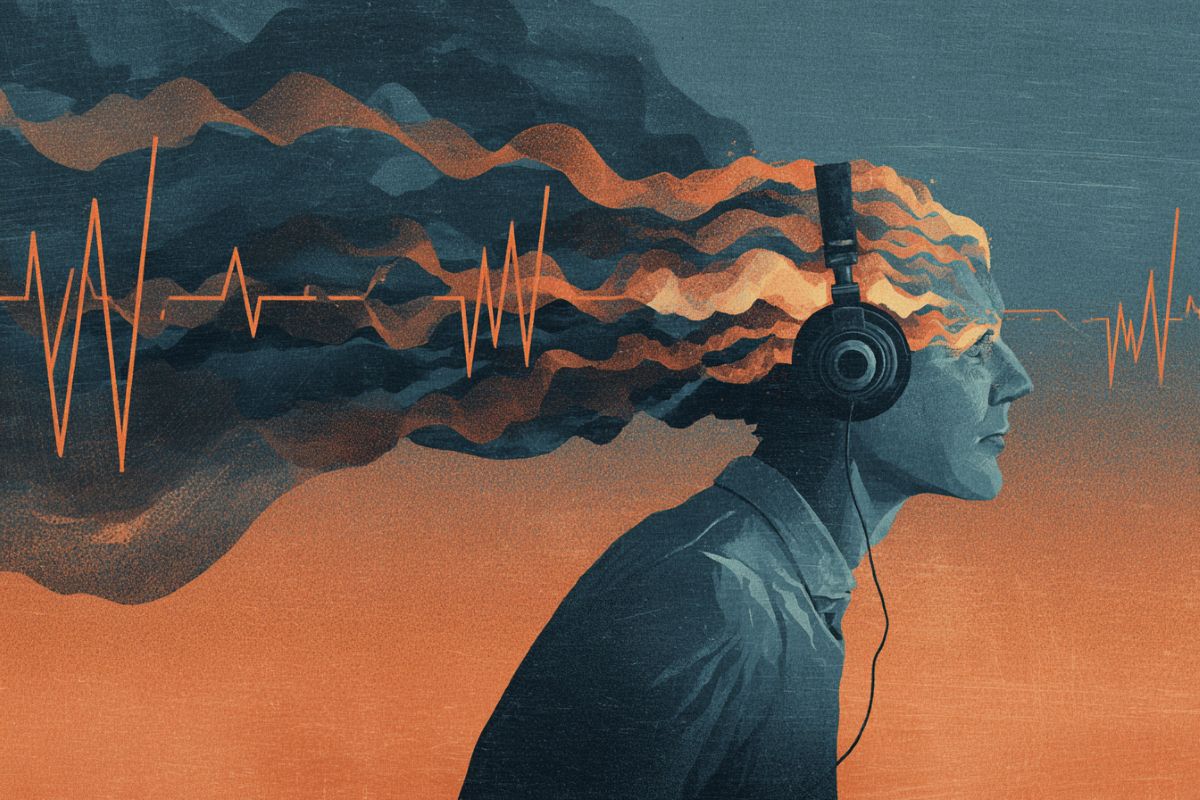
If you have ever searched for the best frequency for focus, you have probably run into a wall of confident, contradictory numbers. One video swears by 40 Hz. Another insists on 432 Hz. A study playlist promises 8 Hz alpha waves, while a productivity forum champions beta. So which one is right?
Here's the honest answer up front: there's no single magic number that flips a switch in your brain. But that doesn't mean the science is useless. Decades of neuroscience research point to specific frequency ranges that reliably line up with focused mental states, and to one particular frequency that keeps showing up in the strongest attention studies. Let's clear up the confusion.
Why "the best frequency for focus" is the wrong question
When people ask about frequency, they usually mean one of two very different things, and mixing them up is the source of most of the confusion online.
The first meaning is the pitch of a tone, for example, a 432 Hz or 528 Hz sound, the kind promoted in "Solfeggio frequency" playlists. These are claims about the raw pitch of the audio you hear.
The second meaning is your brain's own rhythm. Your neurons fire in coordinated waves, and scientists measure those waves in hertz too: the delta, theta, alpha, beta, and gamma bands. This is where the real focus science lives, and it's a completely different thing from the pitch of a tone.
So the better question isn't "what single Hz should I play?" It's "which brain-wave state supports focus, and how can sound help me get there?" That question actually has evidence-based answers.
The brain-wave states behind focus
Your brain cycles through different oscillation patterns depending on what you're doing. A few of them matter for concentration:
Alpha (roughly 8–12 Hz): a calm, relaxed-but-alert state. Helpful for creative, open problem-solving and for settling in before deep work.
Beta (roughly 13–30 Hz): the workhorse of active concentration. Beta activity is associated with alert, engaged, analytical thinking: reading, writing, coding, and problem-solving.
Gamma (roughly 30 Hz and up, often studied at 40 Hz): the fastest rhythms, linked to attention, feature binding, memory, and moments of sharp cognitive engagement.
Beta is the range most directly tied to the kind of focused, analytical work most of us mean by "concentration." Research generally points to beta-range activity as especially helpful for active mental effort. But gamma is where some of the most striking attention findings have appeared, which brings us to the one number worth knowing.
The frequency that keeps showing up: 40 Hz
If there's a single frequency that deserves the "best for focus" headline, the research points to 40 Hz in the gamma band. It appears again and again in attention studies, and the effects are measurable rather than mystical.
The strongest evidence comes from studies that measured the brain directly. In a peer-reviewed crossover experiment, brain recordings confirmed strong entrainment of gamma oscillations during 40 Hz stimulation and weaker entrainment at 16 Hz, direct evidence that the brain locks onto the 40 Hz rhythm rather than just being soothed by it. That's the key point: 40 Hz isn't just pleasant background sound, it measurably shapes neural activity in the band tied to attention.
Behavioral studies point the same way. Early-stage research has found that 40 Hz stimulation can improve reading-comprehension accuracy and narrow the scope of attention compared to slower frequencies or silence, though these particular findings are still preliminary and awaiting fuller peer review, so treat them as promising rather than settled. (And as we'll see in a moment, binaural beats are a weaker way to deliver that rhythm than the alternatives.)
More recent work extends the picture. A 2025 peer-reviewed study in Scientific Reports (80 participants) tested beta (16 Hz) and gamma (40 Hz) binaural beats on a sustained-attention task and confirmed the brain entrained to the beats, though the effect depended heavily on the exact conditions: gamma beats with a low carrier tone and background white noise improved overall attention, but did not prevent attention from drifting over time. Separately, a study using 40 Hz flashing lights and sounds during an hour-long vigilance task reported better accuracy and faster reaction times, alongside brain-activity changes tied to better attention.
The caveat that keeps the science honest: these effects are real and statistically significant, but they're modest, not dramatic. And they vary between people, some brains lock onto auditory rhythms far more readily than others. Forty hertz is the most research-supported frequency for attention, not a guaranteed switch.
What about 432 Hz, 528 Hz, and binaural beats?
This is where a lot of the internet goes off the rails, so it's worth being clear.
Solfeggio tones (432 Hz, 528 Hz)
These refer to the pitch of a tone, not a brain-wave rhythm. Many people find them pleasant, and pleasant sound can genuinely reduce stress and mask distractions. But the specific claims that these exact pitches unlock focus or "heal" the brain aren't supported by rigorous neuroscience. Enjoy them if they help you relax, just don't expect them to entrain your attention the way a 40 Hz rhythm can.
Binaural beats
Binaural beats create a perceived beat from two slightly different tones played in each ear, for example, 200 Hz and 240 Hz produce a 40 Hz beat. They require headphones and rely on your brain computing the difference. Some studies show attention benefits, but the neural synchronization they produce tends to be relatively weak, and results are inconsistent across people.
A more direct approach is amplitude modulation: rhythmic pulses built into the sound itself, in both ears, so the brain doesn't have to reconstruct a beat from an illusion. This is the approach Brain.fm's technology is built on, and it's worth understanding why it matters.
How Brain.fm turns the science into something you can actually use
Knowing that 40 Hz gamma or beta-range rhythms support focus is one thing. Sitting down and generating that stimulation while you work is another. This is the gap Brain.fm was built to close.
Instead of layering claims onto a calming playlist, Brain.fm engineers functional music around a principle called neural phase locking. Rapid rhythmic modulations are embedded directly into the music, in both audio channels, giving your brain's auditory system a steady, structured rhythm to track. Research suggests that as neural activity begins to synchronize with those pulses, it can be nudged toward the state you selected: Focus, Relax, or Sleep. Individual responses vary, and Brain.fm is a tool to support focus, not a medical treatment.
The evidence for this specific mechanism is encouraging. In Brain.fm's peer-reviewed work, modulated music produced stronger neural phase locking than unmodulated control music, with the clearest effects in frontal brain regions and in the beta range associated with sustained attention. Brain-imaging work has also reported that the modulated focus music drove greater activity in attention-related brain networks than control music or plain noise, and that adjusting the depth of the modulation appeared to help listeners with attention difficulties more.
That's the practical difference. A random "focus playlist" might improve your mood or cover up office noise, which is genuinely useful. But it isn't systematically targeting the neural timing that underlies attention. Engineered functional audio is.
If you want to feel this rather than read about it, the fastest test is to try it on your own hardest task. Start a free Brain.fm trial and put the Focus mode up against your usual playlist for one work session.
How to actually use focus frequencies today
You don't need to memorize brain-wave charts to benefit from this science. A few practical steps go a long way:
Match the sound to the task. For heads-down analytical work, reach for beta- or gamma-oriented focus audio. When you need to relax or think loosely, an alpha-leaning, calmer track fits better.
Give it time. Entrainment builds over minutes, not seconds. Let a focus track run for a full work block rather than judging it after thirty seconds.
Reduce competing distractions. Sound that supports focus works best when it isn't fighting notifications. Pair it with a closed inbox and silenced phone.
Notice your own response. Individual variability is real. Track which style of audio actually helps you get more done, and lean into that.
This last point matters more than any single number. The "best" frequency for focus is partly the one that reliably helps your brain settle into work, and the only way to know is to test it on real tasks.
The bottom line
There's no secret single frequency that guarantees concentration. But the science isn't empty either. Focus lives in your brain's beta and gamma rhythms, and 40 Hz gamma stimulation is the most research-supported frequency for attention, with beta-range activity underpinning sustained analytical work. Solfeggio pitches like 432 Hz and 528 Hz are pleasant but not attention-entraining, and binaural beats are a weaker delivery method than modulation built directly into the sound.
The real takeaway isn't a number to chase. It's a mechanism to use. Sound engineered to guide your brain waves, rather than just fill the silence, is the practical way to turn focus frequencies into focused work.
Ready to put it to the test? Start your free Brain.fm trial and experience focus audio engineered on neuroscience, not a playlist with a hopeful label.